In the vast universe of video gaming, few names resonate as powerfully as Nintendo. This iconic brand has captivated gamers for decades, weaving rich narratives and unforgettable characters into our cultural fabric. From the birth of rudimentary gaming consoles to the innovative leaps of today, Nintendo’s legacy is a story worth exploring. In this text, we jump into the evolution of Nintendo gaming, how it has innovated over the years, and what the future might hold for this beloved gaming powerhouse.
The Evolution Of Nintendo Gaming
Nintendo’s journey began in 1889 as a playing card company in Kyoto, Japan. But, it wasn’t until the late 1970s that the company made a significant mark in the video game industry. The release of the Nintendo Entertainment System (NES) in the mid-1980s revolutionized home gaming, establishing Nintendo as a dominant force in the industry.
Key Consoles That Shaped Nintendo’s Legacy
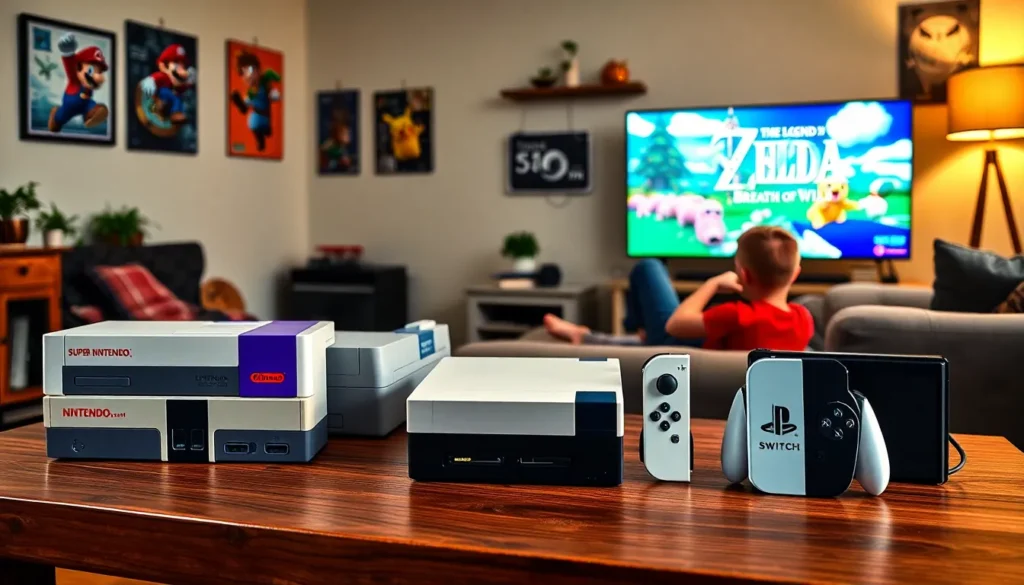
Starting with the NES, iconic consoles like the Super Nintendo, Nintendo 64, Wii, and Nintendo Switch have continually redefined gaming experiences.
- NES (1983): Resurrected a faltering video game market by introducing classic titles like “Super Mario Bros.” and “The Legend of Zelda.”
- Super Nintendo (1990): Elevated graphics and gameplay, bringing to life beloved franchises such as “Donkey Kong” and “Street Fighter.”
- Nintendo 64 (1996): Marked a significant shift to 3D graphics and introduced multiplayer gaming with titles like “Super Smash Bros.” and “GoldenEye 007.”
- Wii (2006): Not only made gaming accessible to a broader audience due to its motion-control capabilities but also brought families together.
- Nintendo Switch (2017): A hybrid console that allows for both handheld and home gaming, solidifying Nintendo’s relevance in a competitive market.
Iconic Nintendo Franchises That Reshaped Gaming
Nintendo has delivered some of the most iconic franchises in gaming history. Series like “Super Mario,” “The Legend of Zelda,” and “Pokémon” have created expansive universes that challenge players while offering nostalgia and innovation. These franchises have grown beyond games, influencing movies, toys, and even theme parks.
Innovations In Nintendo Game Design and Technology
Nintendo has always been at the forefront of gaming innovation, consistently taking risks that set trends throughout the industry.
How Nintendo Pioneered Portable Gaming
The Game Boy, launched in 1989, was a groundbreaking product that truly captured the essence of portable gaming. Its success made handheld consoles a household staple. The subsequent iterations, from the Game Boy Advance to the Switch, showcased Nintendo’s commitment to creating accessible gaming experiences. The Switch, in particular, blurred the lines between handheld and console gaming, allowing players to experience their favorite titles on the go.
The Impact Of The Nintendo Switch On Modern Gaming
Launched in 2017, the Nintendo Switch has had a significant impact on gaming culture. Its hybrid nature has not only catered to versatility but also expanded game design. Titles like “The Legend of Zelda: Breath of the Wild” and “Animal Crossing: New Horizons” exemplify how gameplay mechanics can adapt to the system’s unique features, further enriching the gaming experience.
Community and Culture Around Nintendo Games
Nintendo games foster vibrant communities, uniting fans across the globe.
The Role Of Online Communities In Nintendo Gaming
Online forums, social media platforms, and content creation sites like Twitch and YouTube have become hubs for Nintendo fans to share their gaming experiences. Video game communities often discuss strategies, share fan art, and create guides for popular titles. Events like Nintendo Direct presentations increase anticipation and community engagement, allowing fans to share their reactions and analyze new game releases.
Fan Creations and Their Influence On Nintendo’s Brands
The creativity of the Nintendo fanbase goes beyond gameplay: it spills into art, music, and even game development.
Many fans create spectacular artwork and music remixes that celebrate their favorite Nintendo franchises. Fan games, while sometimes controversial, showcase the community’s passion and often bring attention back to older games, breathing new life into Nintendo’s history. This feedback loop creates a symbiotic relationship, benefiting both Nintendo and its dedicated fans.
The Future Of Nintendo: Trends and Predictions
As technology continues to evolve, so does Nintendo’s approach to gaming. Emerging technologies such as virtual reality (VR) and augmented reality (AR) present exciting possibilities for the gaming giant.
Also, with a growing emphasis on online multiplayer experiences and cloud gaming, Nintendo is expected to adapt its strategy to remain competitive. An exploration into retro re-releases of classic games suggests a commitment to both innovation and nostalgia, ensuring that Nintendo retains its dedicated fanbase while attracting new players.
Conclusion
Nintendo’s enduring legacy has continually shaped the landscape of video gaming. With each innovative console, memorable franchise, and thriving community, Nintendo demonstrates a unique ability to adapt and evolve. As the gaming world shifts towards new technologies and online engagement, it will be fascinating to see how Nintendo leverages its heritage while embracing the future. The future of Nintendo is not just about gaming: it’s about creating experiences that resonate with players, ensuring that the spirit of innovation and fun remains at the heart of its mission.